
CKM Syndrome: The Chronic Disease Cluster Beneath Most Patients
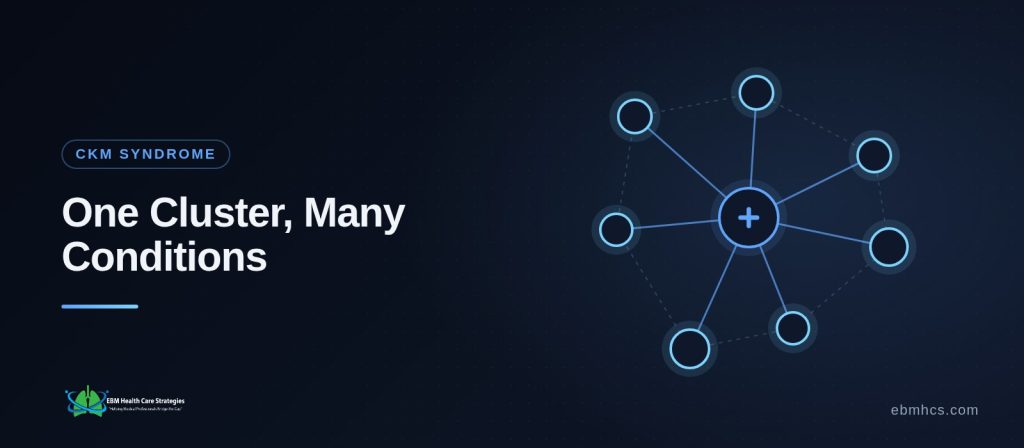
Cardiac, Kidney and Metabolic (CKM) Syndrome links hypertension, heart disease, Type 2 diabetes and kidney disease. Here is how EBM supports each condition between visits.
A Real Person Between Visits: What Patients Experience
What patients experience with CareConnect: thirty-second check-ins on their own phone and a real licensed professional reviewing answers between visits.
How to Measure Whether a Remote Respiratory Program Is Paying Off
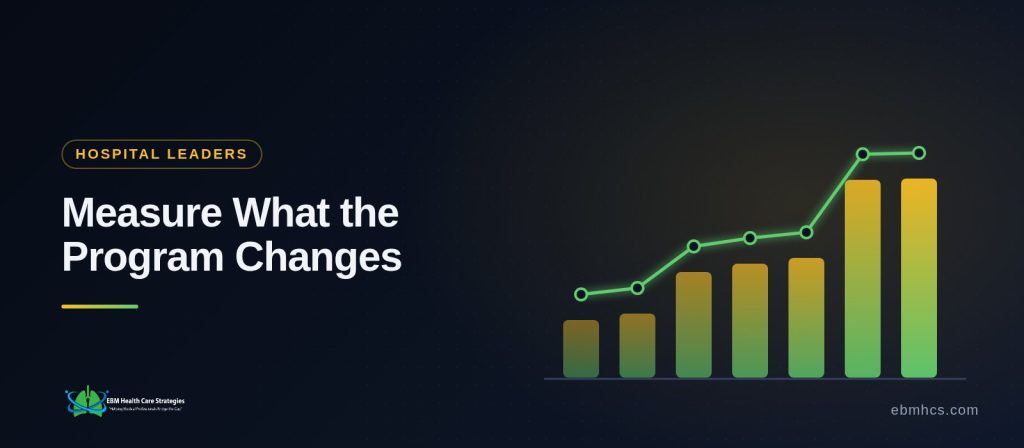
Which metrics show whether a remote respiratory program is paying off: readmissions, ED visits, therapy adherence, staff time and engagement.
Excess Weight: Where the CKM Cluster Begins
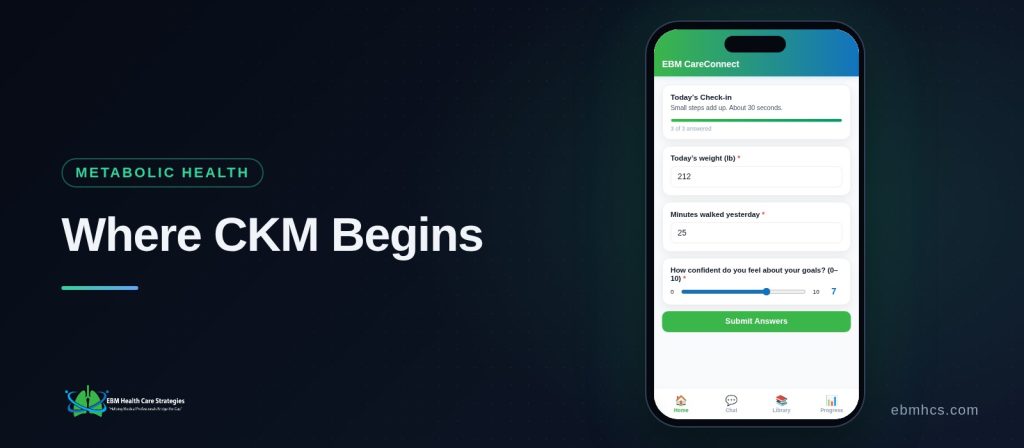
73% of U.S. adults carry excess weight, the starting point of CKM Syndrome. EBM supports steady progress with short daily check-ins and a real care team.
From First Conversation to First Patient: What Deployment Looks Like
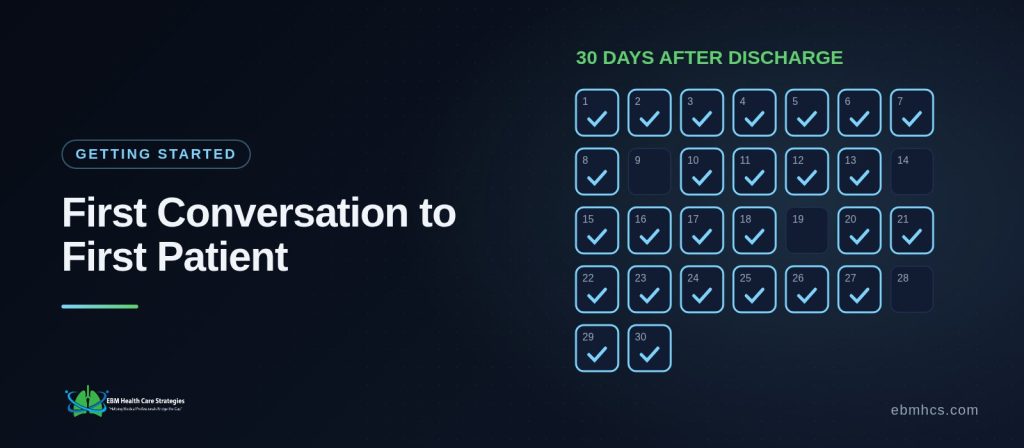
What deploying a remote respiratory program with EBM looks like: a consultative walkthrough, one protocol first, and no hiring, equipment or IT build.
Protecting Patient Data on a Remote Care Platform
Remote care moves patient data outside the hospital walls. How CareConnect approaches HIPAA, role-based access, secure messaging and documentation.
Catching COPD Exacerbations Earlier with Between-Visit Signals
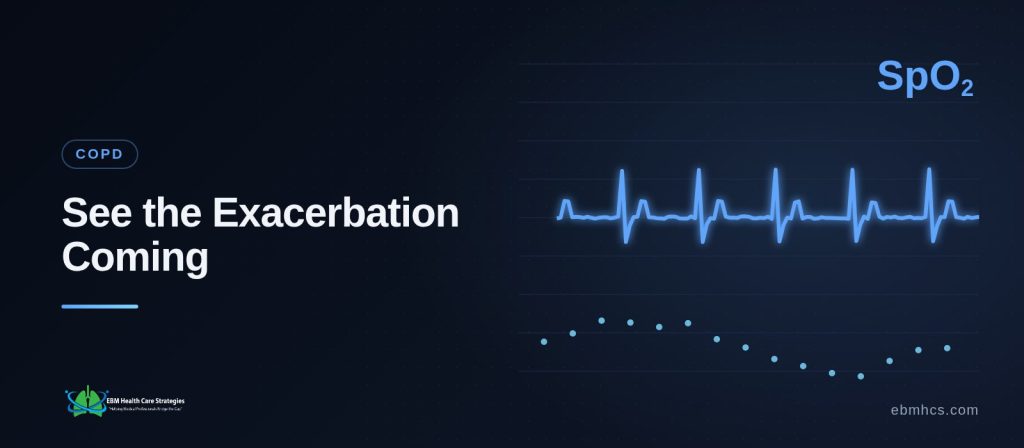
COPD exacerbations rarely arrive without warning. Daily patient check-ins and 14-day trends help care teams see the change and act before a crisis.
One Channel for the Whole Care Team
Chronic patients are cared for by many people who rarely talk. CareConnect gives patient and care team one shared channel instead of another inbox.
Chronic Kidney Disease: The “K” in CKM Syndrome
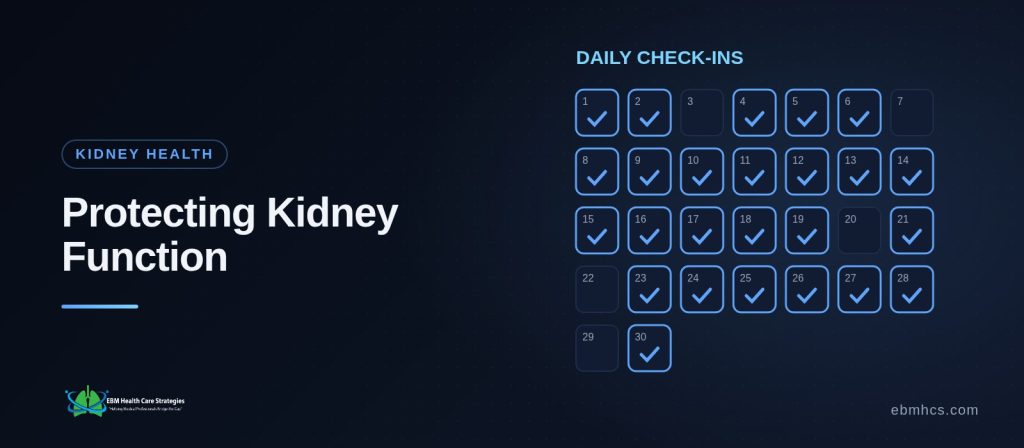
Kidney disease is shaped by blood pressure, diabetes and medications managed at home. EBM helps care teams follow that picture between visits.
Alerts, Not Lists: How Out-of-Range Readings Surface Themselves
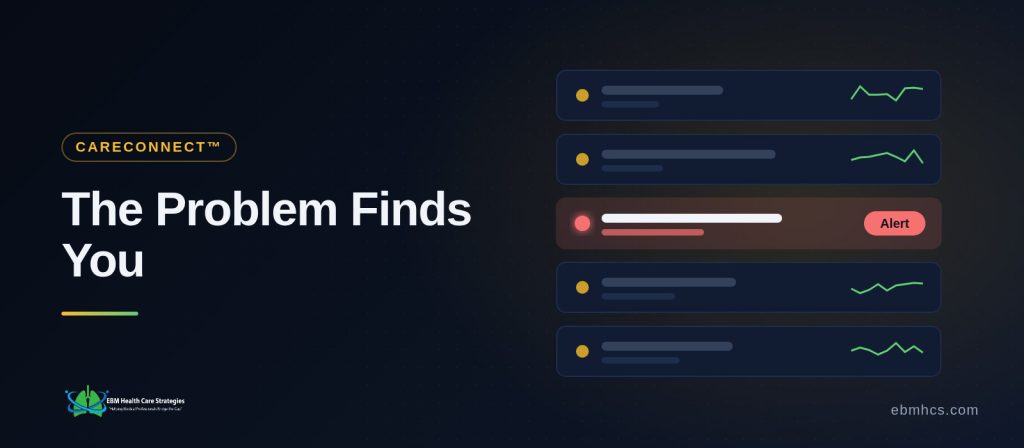
Remote monitoring fails when clinicians must scan long lists for problems. CareConnect raises out-of-range readings as same-day alerts instead.