
Connecting the Medical Neighborhood Around the Respiratory Patient
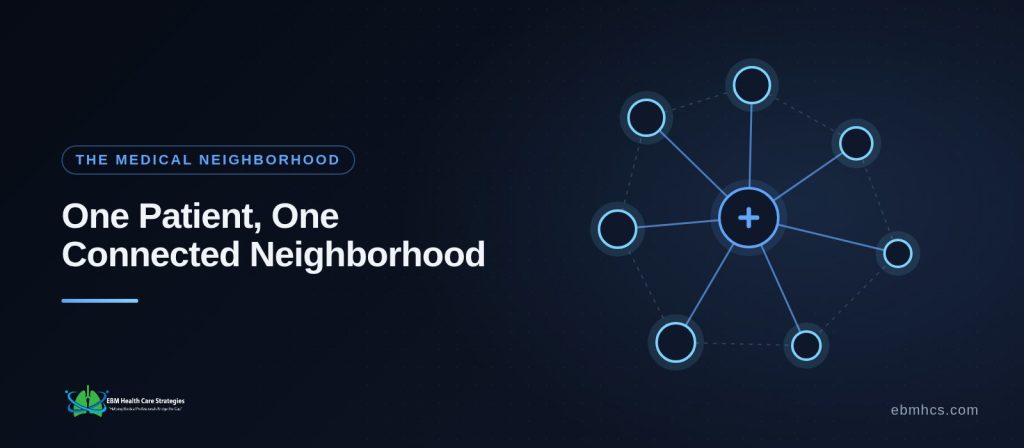
A respiratory patient is seen by many clinicians but rarely by one connected team. See how shared daily data links hospital, PCP, specialists and payers.
No CPT Codes, No Payer Qualification, No Limits: Why It Changes Deployment
With no CPT codes, no payer qualification and no limits on who, a remote care program can reach an entire chronic population starting on day one.
Thirty Seconds a Day: Patient Engagement That Actually Happens
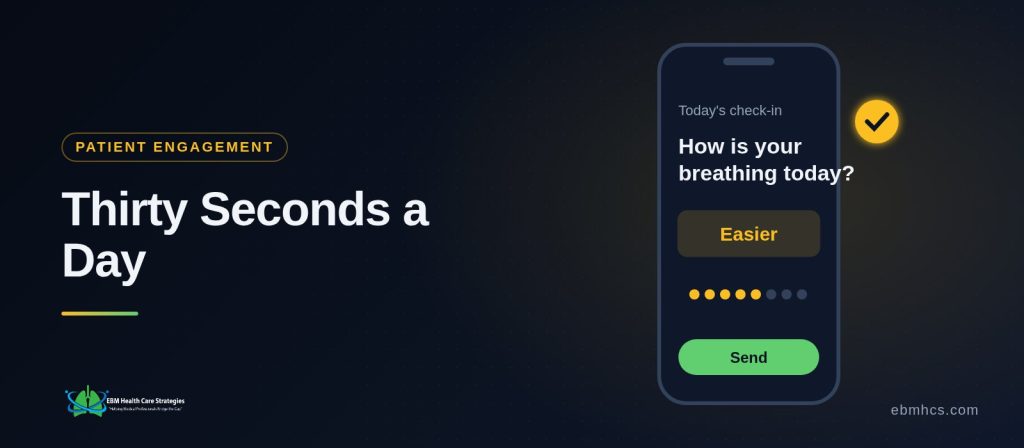
Patient engagement fails when it asks too much. CareConnect asks about thirty seconds a day, on the patient’s own phone, one question at a time.
PDS™: Turning Thirty Seconds of Patient Answers into Clinical Evidence
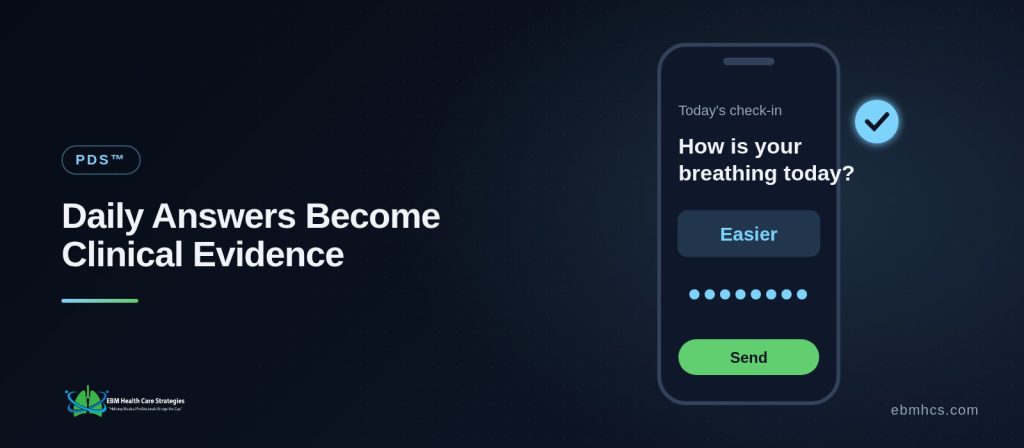
PDS™, the Patient Data System, lets care teams set their own questions and turn short daily patient answers into evidence for therapy decisions.
Type 2 Diabetes Between Visits: Daily Habits Are the Treatment
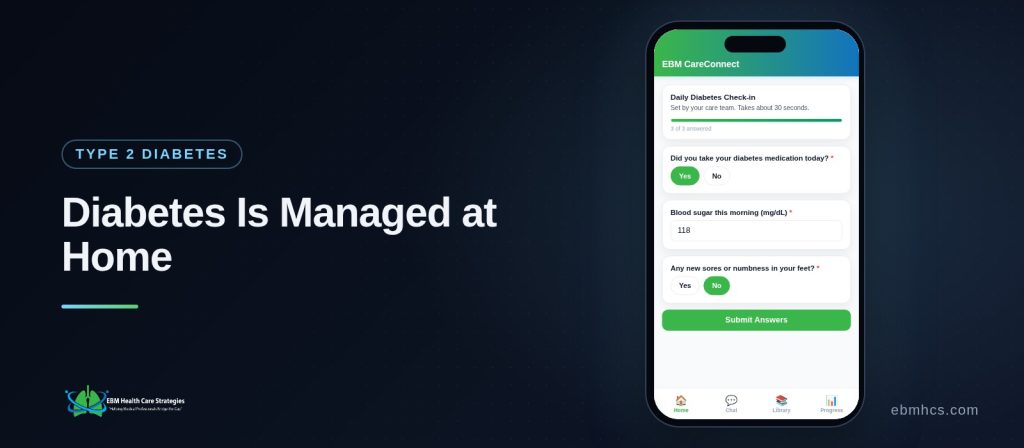
Type 2 diabetes is managed every day at home. EBM turns short daily check-ins into evidence the care team can act on.
The Undiagnosed Patients Already in Your Hospital
Most people with obstructive sleep apnea are undiagnosed, and many are already hospital patients. A Practice-Based Protocol helps find the need early.
Hybrid Overnight Oximetry: A Practice-Based Protocol for Cardio-Pulmonary Care
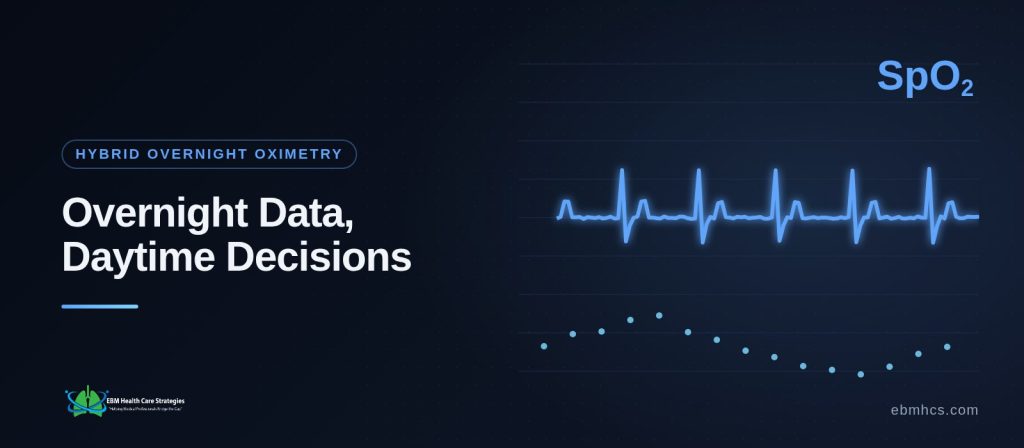
Hybrid Overnight Oximetry is a Practice-Based Protocol for cardio-pulmonary care, from screening through management of therapies like CPAP and oxygen.
Extending the Respiratory Therapist Beyond the Bedside
Respiratory therapists ask five questions about every patient. Remote care lets them keep asking after discharge, with daily data and same-day alerts.
Remote Care Without Hiring, Equipment Purchases, or an IT Build
Remote care programs often stall on staffing, devices and IT. Here is how EBM deploys into existing hospital workflows with zero up-front investment.
COPD Care Between Visits: Seeing a Flare Before It Becomes an Admission
COPD changes day to day. EBM tracks breathlessness, inhaler use and oxygen therapy between visits so care teams can act early.